What I've learned about leading
Seven questions I was asked about leadership, and my honest answers: hard decisions, how I structure my week, the book I return to most, and the night a World Cup qualifier ended in a fight on court.
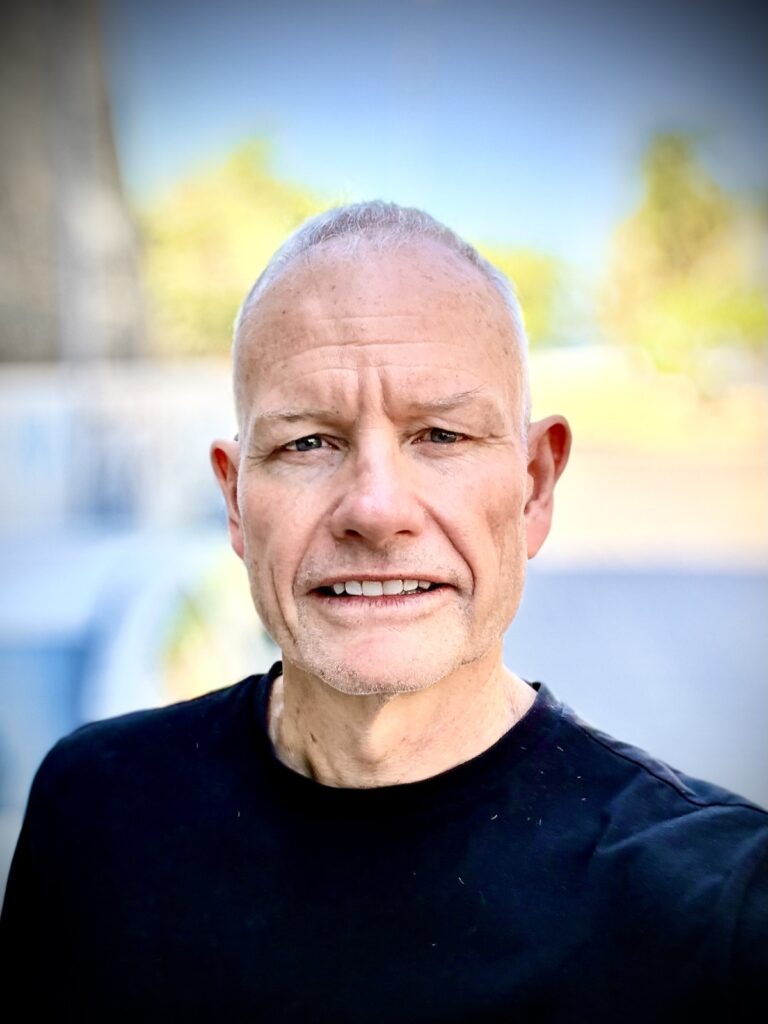
Ned Coten AM.
What has been the hardest part of leading a business?
Finding the right balance between having enough information and making timely decisions that move the business forward.
Through my volunteer role as President and Chair of Basketball Australia, I've been in incredibly difficult and stressful situations where I had to make important decisions quickly with very little information. That gave me real experience and confidence for the next time.
I now worry less about the impact of a decision and more about getting quickly to the point where I can make an informed one. The important thing is to have a point of view and back it up with a strong strategy and argument. I'm not always right, but it gives everyone a starting point to give feedback and move towards the goal.
Early in my career, I found it extremely hard to make confronting or politically difficult decisions, especially when I knew people would be upset or angry. I often avoided them until the problem became overwhelming, and far worse than if I'd acted early. I've since learned that it's best to make difficult decisions quickly, implement them and get on with it. You can't do that without compassion, and I still find it hard. But hard conversations need to happen early and openly to get the best outcome.
How did you become a CEO?
When I left school, I had a scholarship to the Australian Institute of Sport, where I furthered my basketball career and studied for a Bachelor of Education. Because of my sporting connections, I only taught for six months before moving into sports management. It wasn't planned. It was a consequence of my circumstances.
From then on, I tried to add as much value as I could. I went over and above, made sure problems were solved and looked at every situation as if I owned the business. I also ran small ventures on the side, including basketball camps, buying and selling property and a very small consulting business. They taught me to handle difficult situations and juggle competing priorities, and to understand what owners go through.
I worked my way up to become CEO of an NBL team in Perth, then held similar roles. After 12 years I didn't want to work in sport anymore, but I didn't have many other options. Through sporting connections, I met the owner of a brand strategy business. I started as an employee, then we went into business together and built a successful consultancy. I later sold my shares back to him and consulted privately for two years, while investing in self-storage and aged care, which I still hold.
In many of those businesses I set up and chaired advisory boards. As a volunteer, I joined the boards of Basketball Victoria and then Basketball Australia, eventually becoming its President and Chair. I didn't feel ready for the role, but I worked hard, and it has been one of the most enjoyable and educational experiences of my career.
Throughout, I've made a habit of meeting people and talking about opportunities. One of those conversations led to me becoming an investor in, and the CEO of, EngageRM. The role brought together my management and governance experience, my training as a teacher, my work in technology and my years in sport and entertainment.
I often think I should have been far more strategic about my career, but that just wasn't my path. Hindsight is a great thing. The real strength comes from making decisions and learning as you go.
How do you structure your day and your week?
I'm a morning person. I don't think that's right for everyone, but it works for me. I get up at 4.45am and spend the first half hour exercising in the lounge room, doing push-ups, sit-ups and planks, while I unpack the dishwasher, tidy the kitchen and make a coffee between sets. It clears my head.
Then I sit at the computer for two hours of what I call thinking work: writing, reports and hard problems. No emails and no overseas calls, because that's when my mind is sharpest. When I wrote my book on marketing and branding in sport, I spent the first two hours of every day on it and finished it in six weeks. It's amazing what you can do with a consistent block of time for one task.
I structure the week the same way. Mondays are free of meetings and calls, so I can focus on work that needs an hour or more of total concentration. As a result, I love Mondays. Tuesdays are back-to-back meetings, as I try to put all my meetings into one or two days. Wednesdays are a mix of meetings and client calls. Thursdays I keep mostly free, and Fridays are for strategic meetings such as boards.
I wouldn't call myself a workaholic, although my wife might disagree. I enjoy my work, and I've been fortunate to find my thing. Friday night is the one night I never do anything work-related. On Saturday mornings I usually head to one of the storage facilities I've built up over the years. I enjoy physical work, and it's my outlet from sitting at a computer.
The secret is to understand when you work best, what your skills are and what motivates you, and to be honest with yourself about it. I've also been very fortunate to work closely with an outstanding executive assistant, who handles the detail so I can focus on the strategic and creative work. She has my total trust.
What's the most recent leadership lesson you've learned?
Take control when it's required.
Over the past three years, I've been in several situations with a great deal of pressure and confusion about what to do: widely varying views, rising angst and growing stress for everyone involved. In the past, I would have been diplomatic, heard all the views and tried to keep everyone happy. I learned the hard way that this doesn't work. What's needed is decisive action and someone to make the call.
“
In these situations, it's critical for someone to take control, and it might as well be you.
NED COTEN
Someone once told me that most people walk around with their umbilical cord in their hand, looking for somewhere to plug it in. Sadly, I've found that to be true. If you have the information and experience, taking control eases the pressure on everyone and gives them certainty about the way forward. Your decisions won't always be right, but they'll be far better than no decision and a room full of confusion.
Which book has had the biggest impact on your leadership?
I've read hundreds, probably thousands, of books on leadership, marketing and personal development. The most dog-eared one on my bookcase is The 80/20 Principle by Richard Koch.
The principle says that 80% of the results in any situation come from 20% of the inputs. I've found it true in every part of life and leadership. Carpet tiles exist because only 20% of a carpet gets walked on. Insurers offer no-claim bonuses because most drivers never claim, while a small group has nearly all the accidents. You wear a few favourite clothes all the time, while that jacket you bought three years ago has been worn once.
Sometimes it's 95/5 or 99/1. It doesn't matter. Most of what we do doesn't lead to anything meaningful, so it's critical to choose a few things and focus your time and energy on them. We complain about not having enough time, but we waste most of it on activities that make us feel busy and don't produce results. Choosing the right things to do is much more important than doing things right.
How do you build leaders in a growing business?
Our business isn't large, but it's growing, and this is one of our biggest challenges. I believe people should be treated the way I expect to be treated, with respect and dignity. I'm a big believer in giving people the chance to prove themselves and letting them make mistakes along the way. Most mistakes aren't catastrophic, and with good mentoring they give people the confidence to lead.
In my experience, confidence is the number one factor in strong leadership. Most people have the skills and experience they need. They just don't have the confidence to step up. It held me back for many years. Give people confidence and they'll grow into the role. The 80/20 principle applies here too: you'll find one or two incredible people to invest most of your time in, and they'll develop other leaders in turn.
A night I'll never forget
While I was President of Basketball Australia, I was Head of Delegation for a World Cup qualifier overseas. Several things had happened before the game that meant the local crowd and community didn't hold us in high regard, and from the start it was obvious there were tensions on the court that could explode at any moment.
Just after half-time, my fears were realised and a full fight broke out on the court. The situation was volatile and could have had catastrophic outcomes. Getting off the court was a strategic exercise in itself, and we were locked in the change rooms for two hours while the crowd dispersed. We were then taken to what's called a blind hotel, where only the bus driver knows where you're going, and sent a small group back to collect our gear. The athletes and staff were understandably shaken, and so was I.
We then had to leave the country in totally different circumstances. Drawing on my experience, I knew we had to act decisively and make every step very clear. I stayed up all night building a plan for the next two days, and it proved critical. We kept people informed at all times, and they knew they could come to me with questions whenever they needed to.
Looking back, it was a life-changing moment for me. It was a time when I could use all the skills I'd built over many years and put them into action. And again, the critical thing was the confidence to do it.
A note on dates
Ned wrote these answers in March 2021, when he was CEO of EngageRM and Chair of Basketball Australia. He has been Executive Chair of EngageRM since 2024.

I'd love to hear from you
If this article raised a question for you, or you'd like to talk something through, send me a note. I read my own email and reply as quickly as possible, generally within 24 hours.